🔥 Last Day to Save on Freeze-Dried Favorites! Sale Ends at Midnight → Shop

Water Preparedness for Everyday Readiness | Clean, Stored, Reliable
Learn how to store clean drinking water using simple, everyday preparedness methods—filtering, safe treatment, and smart water preparedness storage you can trust.
FOOD STORAGE
Monty
1/24/20264 min read
Everyday Water Preparedness
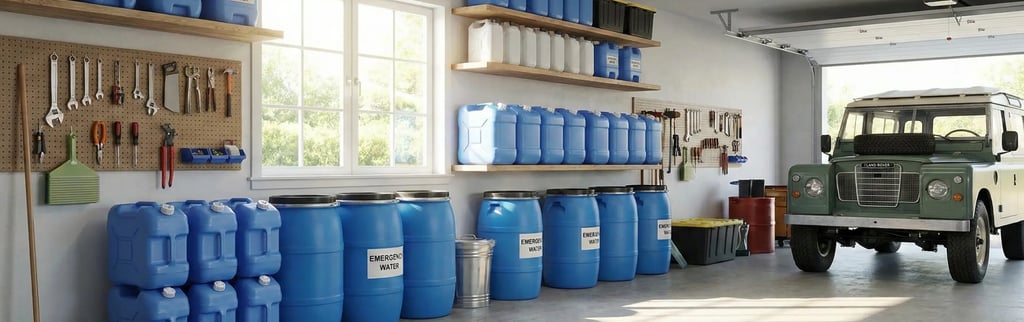
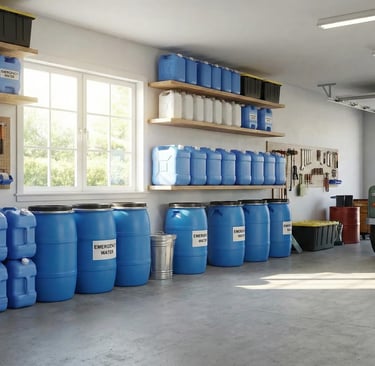
How to Store Clean Drinking Water Long Term
Water has no shelf life. What matters is how clean it is—and what you allow to get into it over time.
When we say “clean water,” we mean water that contains only water. No particulates. No pathogens. No contaminants. Technically, distilled water is the cleanest form available. However, distilling water during an emergency is not cost-effective, and storing distilled water long term isn’t practical for most households.
Instead of chasing perfection, everyday water preparedness is about following a reliable, repeatable process.
What It Really Means for Water to Be “Clean”
Clean water is defined by what it doesn’t contain. Even clear water can hold invisible contaminants or microorganisms. That’s why long-term water storage isn’t just about filling containers—it’s about protecting water from contamination over time.
This is especially important when preparing ahead of disruptions, not during them.
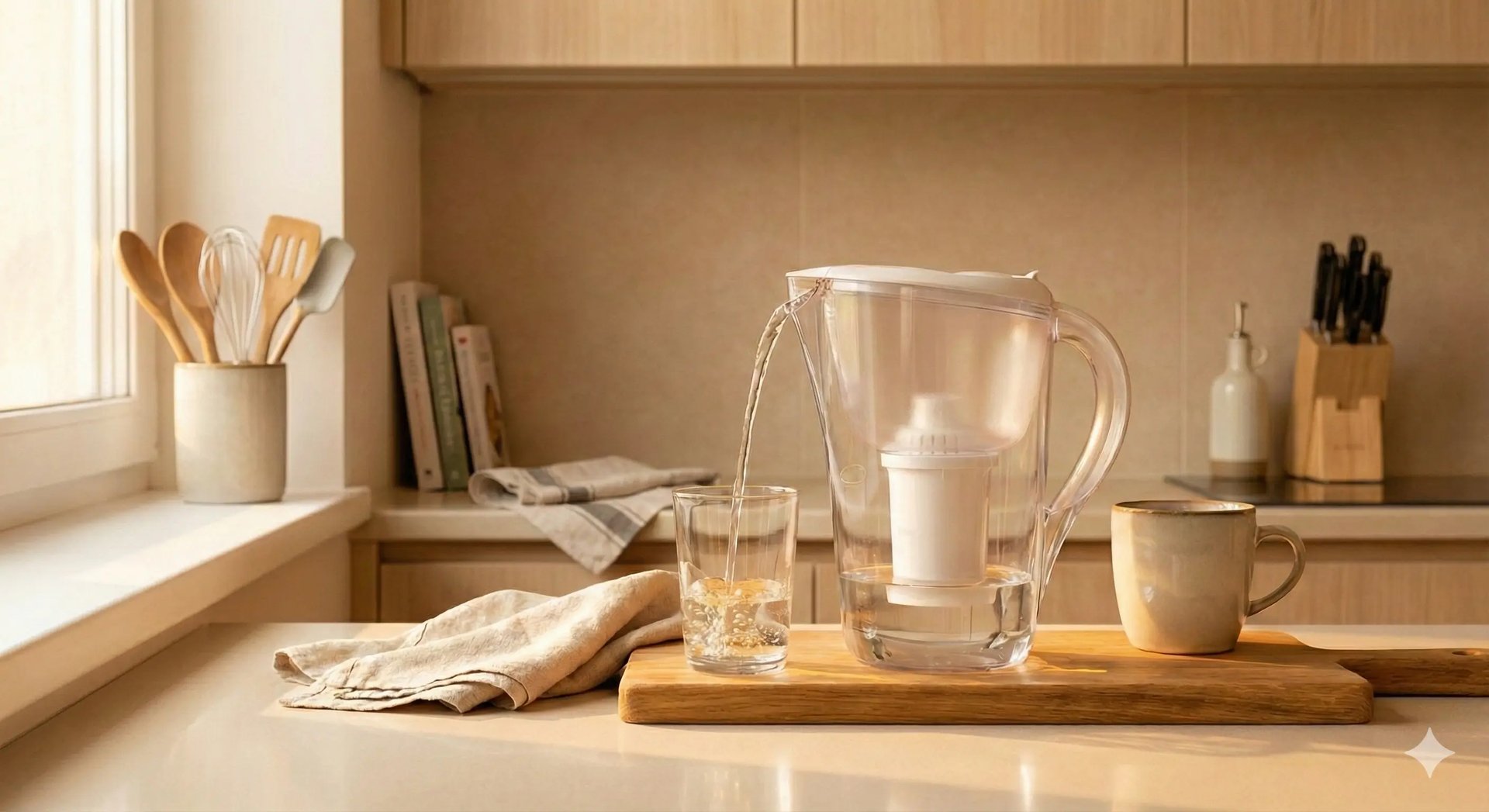
The Simple 4-Step Method for Water Storage
Long-term water storage works best when done in layers:
Filter the water
Filter it again when possible
Chemically treat the water to defeat pathogens
Store enough water in proper containers
Each step adds another layer of protection and peace of mind.
If you want a simple starting point for food and water preparedness, 👉 Start My Prep Journey helps you build confidence one practical step at a time.
How Much Water Should You Store?
How much water you need depends on:
The number of people in your household
How long you want to be prepared
Whether the water is for drinking only or also for cooking and hygiene
Just as important as quantity is container quality. Clean, food-grade containers matter. Poor containers can compromise even the cleanest water.
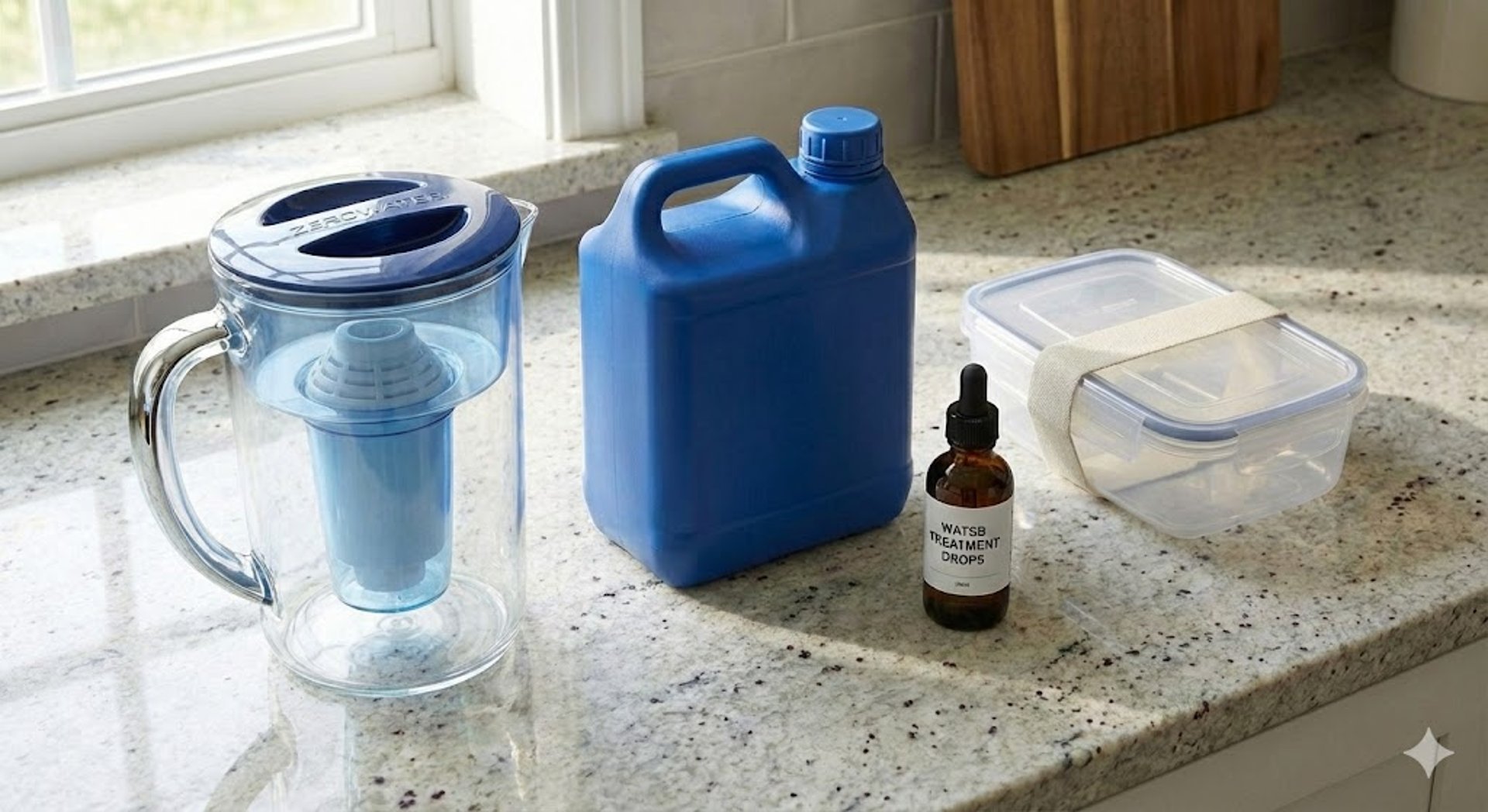
Filtering Water for Long-Term Storage
There are many good water filters on the market. Quality matters, especially when storing water for years instead of days.
For low-cost home filtration, my top recommendation is a ZeroWater filter. It’s similar to Brita in size and use, but it includes a water testing meter.
In my home, faucet water typically tests around 200 parts per million (PPM). After filtering, it consistently tests at 0 PPM. I’ve tested many filters over the years, and most do a good job. However, when storing water for 10 years or longer, filtration alone isn’t enough.
That’s why I always combine filtering with chemical treatment and ultra-clean containers.
This approach assumes you are preparing in advance, using water from a household faucet or outdoor hose.
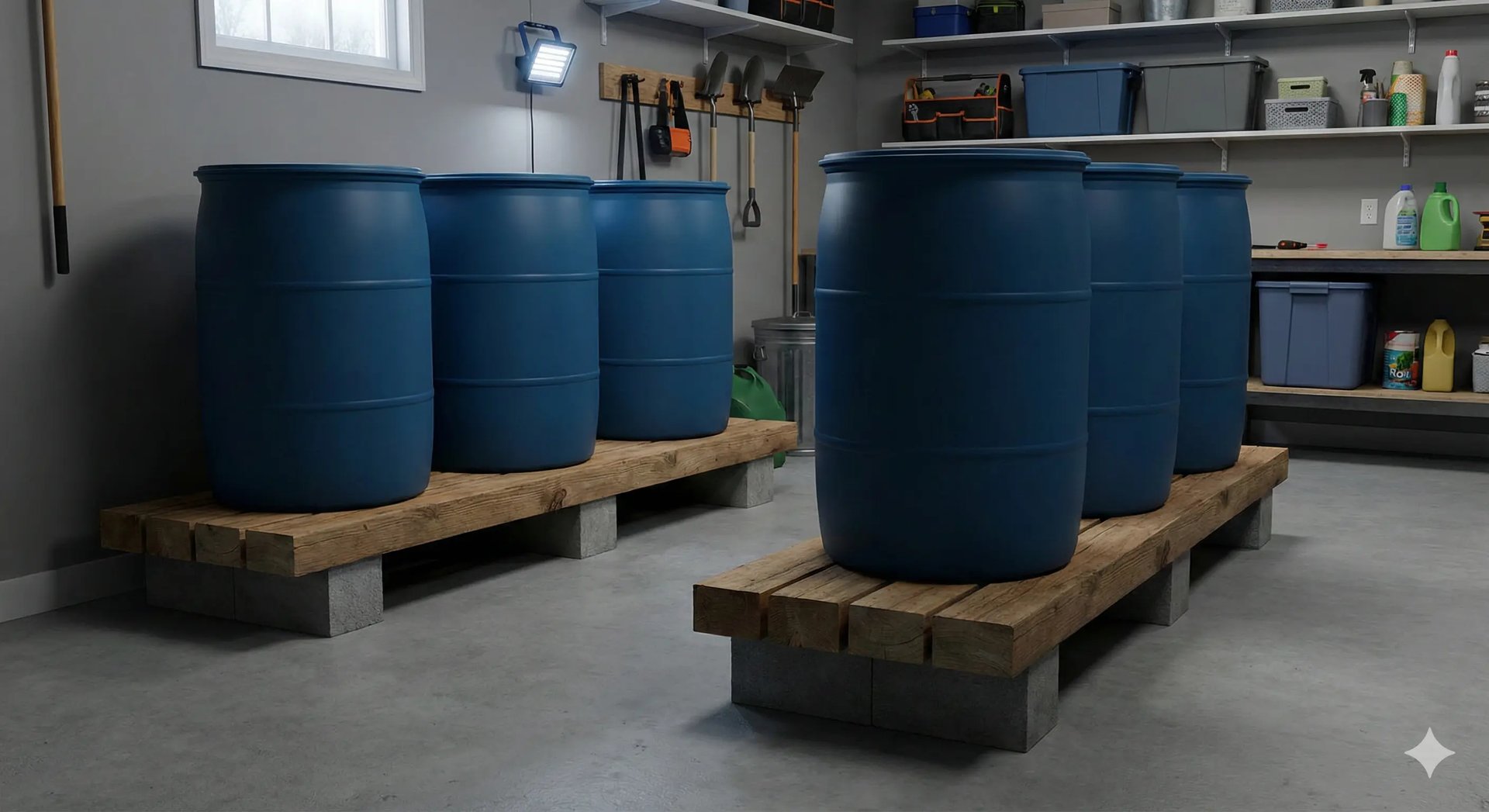
A Real-Life Example: 25 Years of Stored Water
In 1999, during the Y2K panic, I helped a friend store water for long-term use. Y2K was the year 2000—when many believed computers would fail overnight.
My friend stored water in eight 50-gallon blue barrels. A pitcher-style filter wasn’t practical at that scale, so we used a Sawyer filter with a hose adapter.
How to Clean and Prepare Large Water Containers
We began by sterilizing each barrel. Bleach was added to the empty drums, and we shook them aggressively to ensure every interior surface was coated.
Next, we placed the barrels upside down on sawhorses and rinsed them thoroughly using filtered water. Leaving them upside down made rinsing easier and more effective.
We then left the barrels upside down in the sun all day to dry completely.
Why Chemical Treatment Matters
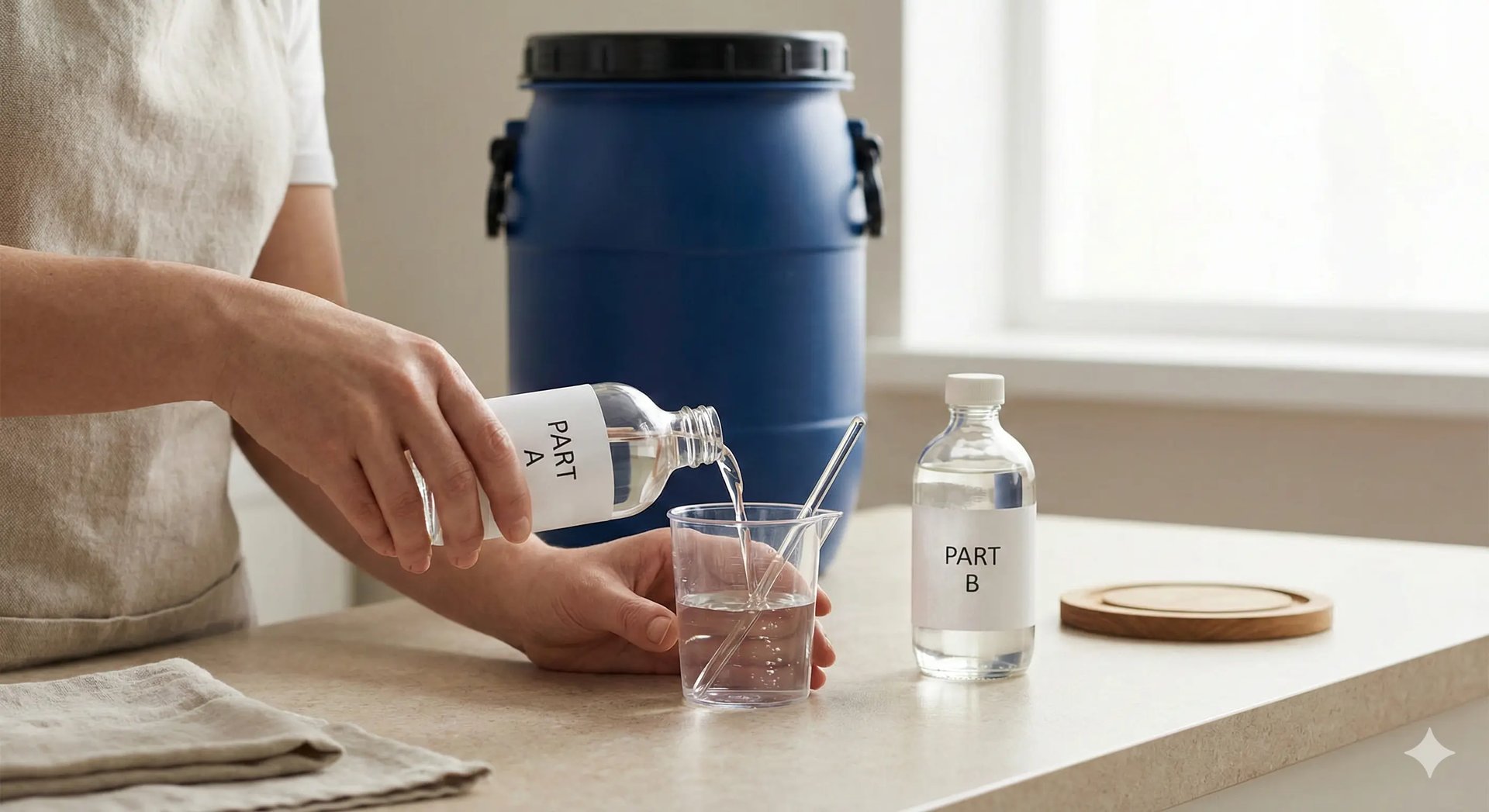
As we began filling the barrels with filtered water, we stopped halfway and added Aquamira. Aquamira requires mixing Part A and Part B and allowing it to activate for four minutes before adding it to the water.
Aquamira is chlorine dioxide, which is nine times more effective at killing pathogens than household bleach. Many municipal water systems, hotels, and casinos use chlorine dioxide to keep water clean.
Once treated, we finished filling the barrels, sealed them tightly, and stored them away from light and heat.
Best Practices for Storing Water Long Term
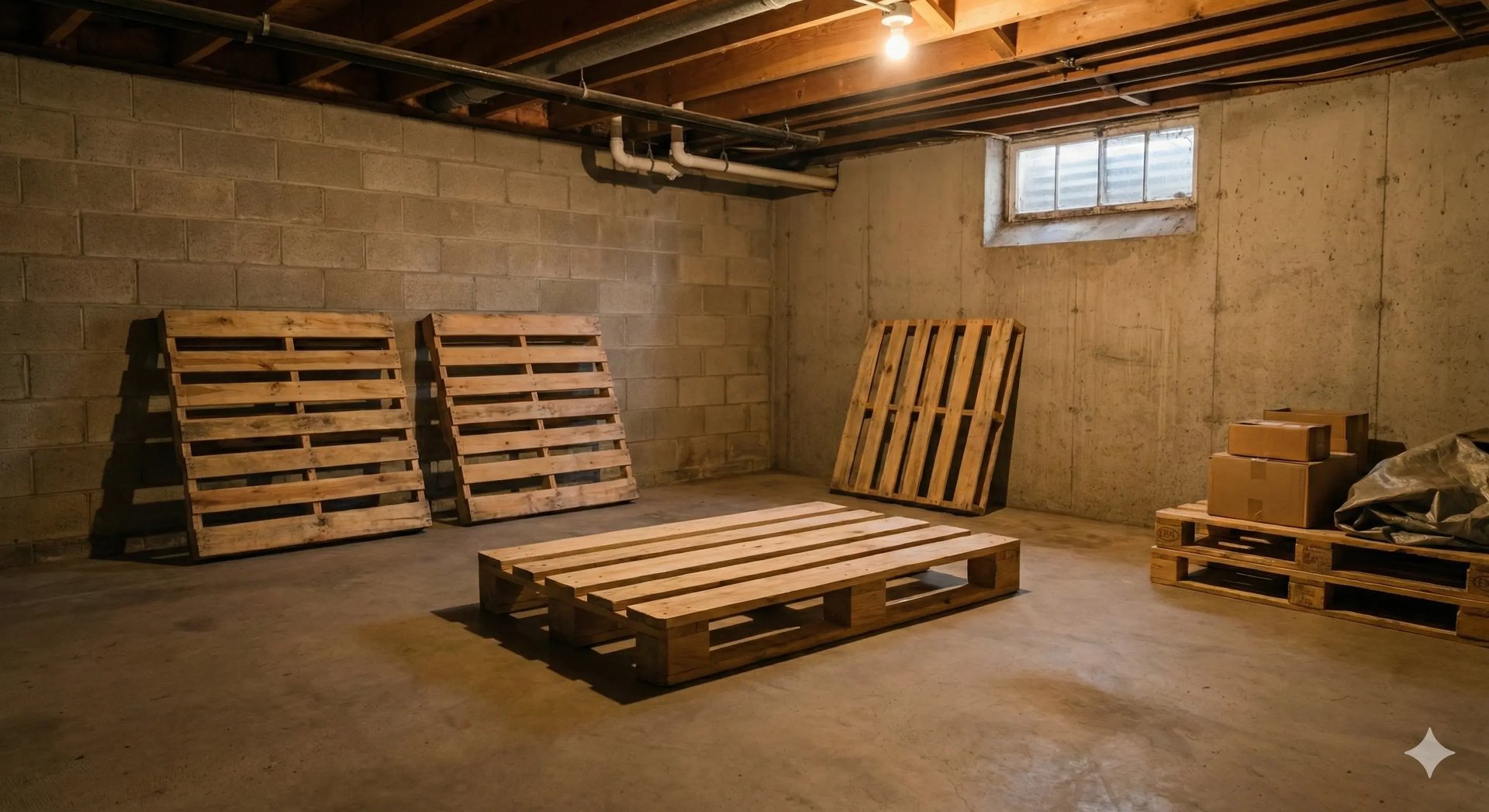
The barrels were stored in a dark Seattle basement. We placed them on wood planks, not directly on concrete. Leaving space between the planks allowed airflow underneath the barrels.
This prevents condensation from forming on the outside. Without airflow, condensation can look like leaking—even when the containers are perfectly sealed.
Stored correctly, the barrels stayed dry on the exterior.
How to Safely Use Stored Water
Fast forward to 2025—25 years later. My friend asked me to help rotate his water supply. I brought a water test kit, eager to see how the water held up.
When we opened the barrels, there was only a faint chlorine dioxide smell. The water tested perfectly. It smelled clean. It tasted clean.
He chose to dump and replace the water anyway, but in a cold, dark environment like that, it could likely have lasted much longer.
When you’re ready to use stored water:
Do not expose it to open air until needed
Stir the water well
Let it sit for 10–30 minutes
The chlorine dioxide dissipates naturally, leaving no chemical smell or taste.
Clean water. Stored correctly. Ready when you need it.
How to Clean and Prepare Large Water Containers
Want a simple way to build everyday preparedness without overthinking it?
Start My Prep Journey helps you take the next right step, one practical choice at a time.
Helpful References
For readers who like to explore official guidance, these resources align well with everyday water preparedness practices:
Ready.gov recommendations for household water planning
Optional Tools Mentioned in This Article
Some readers ask what tools we personally use or reference when storing water. These links are provided for convenience and open in a new tab.
Pitcher-style water filter https://amzn.to/45FVT3W
Chlorine dioxide water treatment drops https://amzn.to/4k9D6nn
Small food-grade water storage barrels https://amzn.to/4qJ8nQG
Large food-grade water storage barrels https://amzn.to/3Z8OvKQ
Test meter for water quality https://amzn.to/4bte5l4
Disclosure: Some links may be affiliate links. This does not change your price and helps support Pantry Today.
Email: team@pantrytoday.com
Phone: (512) 522-8691
© 2025 Pantry Today. All Rights Reserved.
Pantry Essentials
Quick Links
Blog
Preparedness made simple — no bunkers or beards required.
Community & Social
Legal
Affiliate Disclosure
As an Amazon Associate, I earn from qualifying purchases.
Some links on this site are affiliate links, which means we may earn a small commission at no extra cost to you.
Thank you for supporting our family business. 💛